
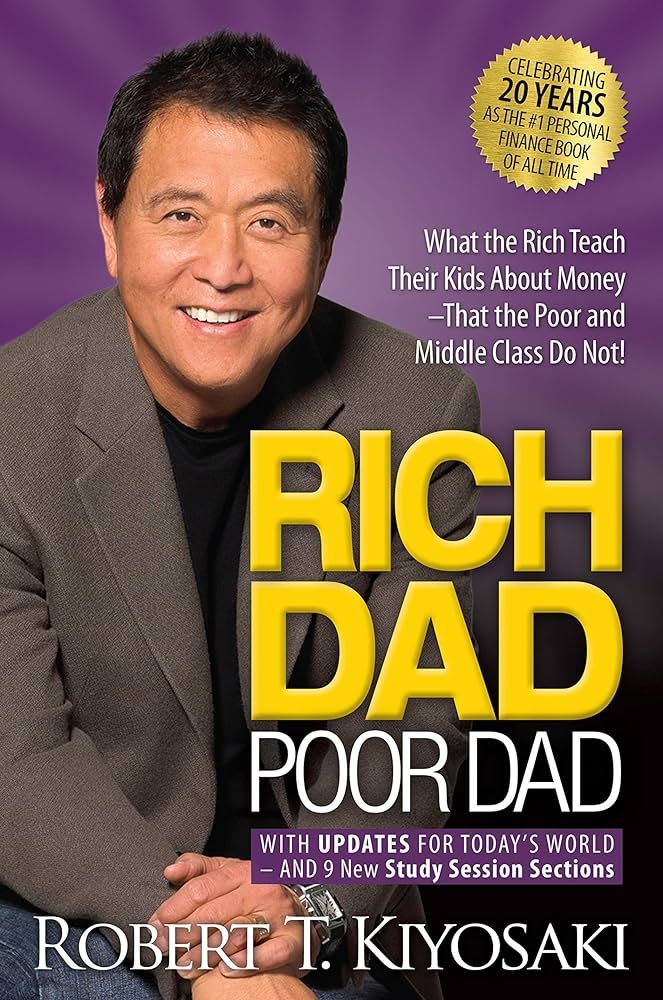
Rich Dad Poor Dad is one of the most popular self-help and personal finance books in the world. Written by Robert Kiyosaki, the book explains money, wealth, and financial freedom in a very simple and easy-to-understand language.
If you are a beginner and want to start reading books about money, investing, and personal finance, Rich Dad Poor Dad is an excellent choice.
In this book, Robert Kiyosaki talks about two fathers:
His own father, whom he calls Poor Dad. His friend’s father, whom he calls Rich Dad
One father was highly educated and worked for job security, while the other had little formal education but built massive wealth. One died leaving millions to his family and charities, while the other died leaving only unpaid bills.
Below are the key lessons from Rich Dad Poor Dad that can change the way you think about money.
Lesson 1: The Rich Don’t Work for Money
The poor and middle class work for money, but the rich make money work for them.
One of the most important lessons from Rich Dad Poor Dad is that relying only on a salary can keep you financially trapped. Rich people focus on building assets like businesses, real estate, and investments that generate passive income.
Key takeaway: Don’t work only for a paycheck—learn how money works and invest wisely.
Lesson 2: Why Financial Literacy Is Important
> “It’s not how much money you make. It’s how much money you keep.”
- The rich buy assets.
- The poor have only expenses.
- The middle class buy liabilities they think are assets.
Financial education helps you understand the difference between assets and liabilities and helps you grow wealth over time.
Lesson 3: Mind Your Own Business
The rich focus on their asset column, while most people focus only on income.
Your job is not your business. A job provides income, but it does not create wealth. True wealth comes from owning assets.
Examples of assets:
- Real estate.
- Stocks and investments.
- Businesses.
- Royalties.
- and intellectual property.
Lesson 4: Taxes and the Power of Corporations
The rich understand the rules of money and taxes.
Business owners: Earn → Spend → Pay taxes. Employees: Earn → Pay taxes → Spend
Corporations allow business owners to legally reduce taxes and protect wealth. This is one of the biggest secrets of the rich.
Lesson 5: The Rich Invent Money
In the real world, it’s not the smartest people who get ahead—it’s the bold.
Poor & middle -class mindset: Study hard → Get a job → Earn a salary.
Rich mindset: Use knowledge, creativity, and take risks → Create opportunities → Money follows
Lesson 6: Work to Learn, Not to Earn
Poor Dad believed job security was everything.
Rich Dad believed learning new skills was more important.
Rich people work to learn new skills, not just to money. Skills like sales, investing, leadership, and communication help create wealth.
Lesson 7: Overcoming Obstacles
The main difference between rich and poor people is how they manage fear.
Even financially educated people fail because of:
- Fear.
- Cynicism (lack of trust)
- Laziness.
- Bad habits.
- Arrogance.
Overcoming these obstacles is essential for building wealth.
Lesson 8: Getting Started
According to Rich Dad, there is gold everywhere, but most people are not trained to see it.
Steps to get started:
- Find a reason greater than reality.
- Make daily financial choices.
- Choose friends carefully.
- Master one formula, then learn another.
- Pay your advisors well.
- Use assets to buy luxuries.
- Choose heroes.
- Teach, and you shall receive.
Conclusion
Rich Dad Poor Dad is more than just a book—it’s a mindset shift. It teaches readers how to think differently about money, assets, and financial freedom. If you want to improve your financial literacy and build long-term wealth, this book is a must-read.
https://amzn.to/4jRhxYZ